
01
Break down the overdue position
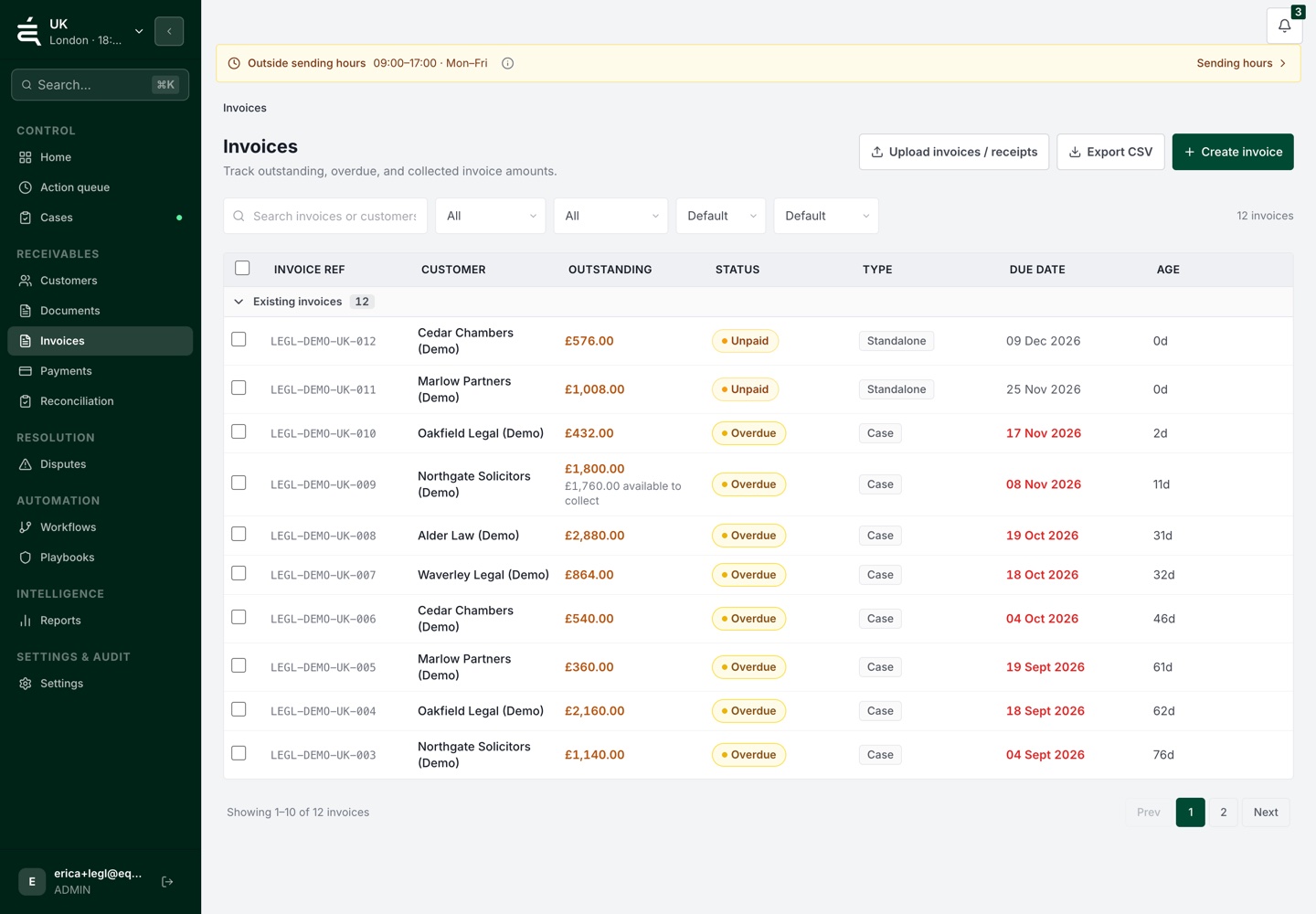
Review the available amounts and due dates by customer account.


Receivables operations

WHY IT MATTERS
A late invoice may need a reminder, an internal answer or a check against a payment promise. Without that distinction, the team can spend another week repeating the same follow-up.
HOW EQUISETTLE HELPS
A total overdue figure does not explain the work behind it. Review the invoices and account context so the team can distinguish routine follow-up from a blocker.
01
Review the amounts and due dates by account. Use the available invoice records to understand where the overdue balance is concentrated.
THE PROCESS
02
Look for an open query, dispute, payment promise or recent conversation. An invoice can remain unpaid because the next action belongs inside your own team.
03
Record who will follow up, resolve the query or review the account. Keep that action with the invoice history so the same investigation is not repeated.

WHAT THIS GIVES YOUR TEAM
01
Review the available amounts and due dates by customer account.
02
Check what has already been said before sending another reminder.
03
Keep missing documents, queries and disputes with the invoices they affect.
04
Make it clear who needs to answer a question before customer contact can continue.
05
Check the updated account record when a reply, commitment or payment changes the position.
Equisettle sends automated reminders before and after the due date, escalates overdue invoices through structured workflows and provides customers with a frictionless payment portal, reducing the time between invoice and payment.
Yes. You can configure pre-due reminders, for example, a friendly heads-up 3 days before the due date, which significantly reduces the number of invoices that become overdue at all.
Equisettle's payment predictor identifies customers with a history of late payment so you can apply a stricter workflow, shorter terms or an earlier reminder schedule for those accounts.
Equisettle includes a late payment interest calculator so you can calculate the statutory interest and compensation you are entitled to charge under the Late Payment of Commercial Debts Act.
Yes. Every invoice shows its current days overdue, and the dashboard highlights ageing invoices so you always know where the biggest risks are.
Review the balance, customer conversation and payment blockers together, then give the next action an owner.
See the account, the open issues and the work already done before deciding what comes next.